Single-family investment office · Surat, India · Family capital since 1993
Hydra Capital
Hydra Capital is the investment office of one family. We manage our own money and nobody else's, in a small number of Indian companies we expect to hold for many years.
Origin
The unsigned cheque
In 1993 we were living in Navsari. The stock market was not something people around us followed, and Infosys was not a name anybody knew. My family applied for shares in the company's public issue, which was undersubscribed at the time. The cheque that went to the bank had not been signed.
An unsigned application gets returned. That is the whole of the procedure, and it should have been the end of it.
Instead a man from the bank came to the house. He knew my Nana, my mother's father, and he recognised the family name on the form. My grandfather had helped a lot of people over the years without keeping count of it, so I have always assumed this was a favour finding its way back. He got the cheque signed, took it with him, and put the application through.
We were allotted the shares. We never found out who he was.
The holding then sat untouched for most of the next decade, which required nothing from us at all. We moved the capital out eventually and put it to work elsewhere, but by that point it had already become the base that everything since has been built on.
We were lucky, plainly. What I take from it is that the largest result in our family's history came out of one afternoon's decision followed by ten years of not interfering with it. I think that is the part we actually inherited.
Before this
I came to investing late, and from somewhere else. I spent my twenties in Mumbai as a fashion photographer. I began by assisting Jagdish Mali and then Jatin Kampani, and later ran my own studio, shooting for garment brands and advertising agencies, including campaigns for Old Spice, as well as editorial work for magazines. Some of it was published in Filmfare. I shot portfolios for actors, Govinda among them, and for students at Actor Prepares, Anupam Kher's school for actors, and worked as a director of photography on a number of video productions.
Photography is mostly waiting. On an outdoor shoot you can lose a whole morning because the weather will not do what you need it to, and then get the frame in four minutes when it finally does. You cannot make the light arrive sooner by wanting it more.
The studio was my own, and I liked that the whole process was mine, from the brief to the final print. What I wanted was for it to grow beyond what one photographer can shoot in a day, so I took it towards software and started a technology company built around photography. It failed. What I kept was an understanding of how technology businesses are actually put together: where the revenue comes from, when it gets recognised, and how convincingly a company can describe growth it has not yet collected.
2018
That was the year I started reading about markets properly. Buffett first, then Mohnish Pabrai, then Munger. Poor Charlie's Almanack did more for me than the rest put together, because it is about how to think rather than what to buy. Taleb came later and mostly changed how I look at risk.
One of the first companies I bought after that was Tanla Platforms, at a time when very few people wanted it. It rose roughly forty times in a short space of time. I had put so little money into it that the result barely registered.
That has been the most useful lesson I have had in markets. We have not found another forty-times since, and I do not expect to find many. We have found a few that did very well, and those were sized properly. It is where the second principle below comes from.
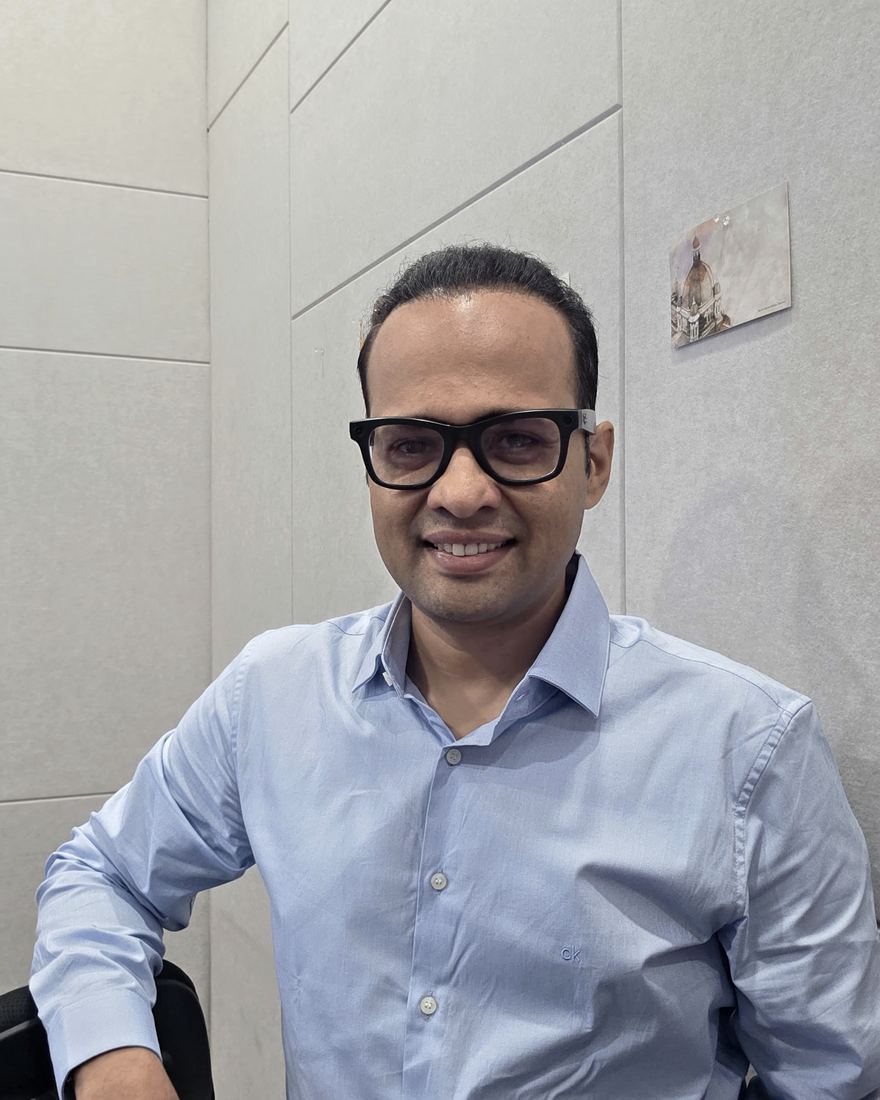
Hydra Capital, Surat
How we work
Six things we hold to
Our own capital, and nobody else's
There is no outside money, no redemption calendar and nobody to explain a bad quarter to. Being able to wait is not a discipline we are claiming credit for; it is just how the office is built. It is also most of the advantage we have.
Size it so that being right counts
When an idea survives the work, it gets around a tenth of the capital, sometimes more. We learned this the expensive way. Being right in a position too small to move anything is a real loss, even though it never appears as one. So concentration here is deliberate, and it is not frequent.
Cash before the story
The cash flow statement gets read before the press release. Where profit is not turning into cash, we want to understand why before we want to understand anything else. Most of what has gone wrong in Indian smallcaps was visible in that gap first.
Primary documents
Annual reports going back a decade, related-party notes, auditor changes, pledge data, shareholding movement. Nearly all of it is public. Very little of it is actually read.
Our own AI, built in-house
We have built our own AI research system and we keep building it, partly because the technology interests me on its own account. It reads across the listed market continuously and tells us when a company does something that crosses our parameters. Which parameters those are is the part we keep to ourselves. It does not pick anything; it decides where our reading time goes, and reading time is what we actually run short of.
Then go and sit with them
No system tells you what a promoter is like across a table. At some point you go, and you talk to people around a business as well as the people running it.
What we do
A few companies, held for a long time
We hold concentrated positions in listed Indian companies, mostly outside the largest names, where reading carefully still changes the answer. All the research is done in-house and from primary sources.
The work runs in three stages and the shape of it has not changed much. Our software watches the listed market and flags where something has genuinely changed. Whatever survives that gets weeks of reading rather than hours. Then we go and meet the people running the business, and where we can, people around it — suppliers, customers, those who used to work there.
We do not manage money for anybody else. We do not accept or solicit outside capital and we are not planning to. When we meet a promoter, it is as a shareholder who intends to still be on the register in five years.
The name
Why Hydra
Most things break under stress. Some hold up. A few actually get better, and those are the ones worth owning.
- FragileBreaks under disorder. Needs the world to stay still.
- RobustWithstands disorder. Comes out the same as it went in.
- AntifragileGains from disorder. Comes out of the shock better placed than before.
In the Greek myth, the Hydra was the many-headed serpent whose every wound left it stronger. It is the plainest picture we know of that third category, and it is the test we apply to what we own: after a bad year, is this business stronger than it was going in, or has it only survived?
Cut one head of the Hydra, and two grow back.
Wind extinguishes a candle and energizes fire.
Nassim Nicholas Taleb, Antifragile
Contact
Get in touch
Office
Hydra CapitalD2, 4th Floor, Kalp Business Center
Opp. Pantaloons, City Light Road
Surat 395007, Gujarat, India
Anything to do with a business we might own is always read. We are not looking for capital, products or services.